

Commercial awnings and canopy systems have evolved into essential architectural elements that influence how a building performs and maximize branding opportunities.
Metal canopies and commercial awnings are part of the building’s aesthetic and can also address functional challenges by providing shelter, directing traffic, and enabling branding.
Awning and canopies have grown in popularity among industry professionals for their structural reliability and long service life. Commercial awnings and metal canopies can elevate both the design and the operational efficiency of a project.
More Than Just Weather Protection
At the most basic level, commercial awnings and canopy systems provide protection from the elements. But there’s nothing basic about how that protection can improve the structure’s long-term durability.
A well-designed building canopy protects entrances by managing rain, snow, and ice accumulation at critical access points. This directly impacts safety by reducing slip hazards and limiting water intrusion into vestibules.
For high-traffic facilities such as healthcare centers, retail developments, and office buildings, commercial awnings and canopies reduce liability risks and improve the flow of foot traffic into the building.
Commercial awnings also play a key role in passive solar control. Properly placed over glazing, they reduce solar heat gain, particularly on south- and west-facing elevations.
This can help stabilize interior temperatures and reduce reliance on mechanical cooling systems. Metal canopies are especially effective in applications that require consistent shading.
Metal canopies are engineered to withstand wind, snow, and seismic loads, making them smart additions for a wide range of climates. Compared to fabric systems, metal canopies are more durable and last longer. They also require less maintenance.
Awnings and Canopies as Branding Tools
Metal canopies and awnings create branding opportunities that can make businesses instantly recognizable to customers. Awning and canopies are great ways to create branding for buildings in areas where local building codes affect design, so companies can maintain consistent branding across multiple locations.
A thoughtfully designed canopy can reinforce the building’s architectural language while enhancing visibility from the street. This is very important for national chains that rely on consumer recognition of their brand identity nationwide.
In dense commercial environments, where signage alone may not be sufficient, commercial awnings help establish presence and guide visitors toward entrances. Form, proportion, and detailing all play a role in how these elements integrate with the overall façade.
Customization is where these systems become especially valuable for brand expression. Metal canopies can be fabricated in a wide range of finishes and colors, allowing them to align with established brand standards.
Integrated lighting, signage, and even digital elements can be incorporated into a building canopy to create a cohesive and functional design feature.
For multi-site developments or franchise operations, consistency is often a priority. Commercial awnings can be standardized across locations while still allowing for site-specific adjustments.
This balance ensures brand recognition without compromising the unique constraints of each project. Builders benefit from repeatable systems, while architects retain flexibility in execution.
Branding Integration
Branding can be built directly into metal awnings and canopies, rather than applied as a separate layer after construction. A well-designed building canopy can carry brand identity through its form, proportions, and finish choices.
Color matching to brand standards is one way to reinforce brand recognition. But integrating the canopy shape, edge detailing, and even the support structure can also create a consistent visual language.
For example, a sharp, angular canopy might reinforce a modern, tech-focused identity, while softer curves may suit hospitality or retail environments. When commercial awnings are designed this way from the start, they become part of the architecture, not just signage bolted onto it. When integrated properly, the branding looks effortless and cohesive instead of forced.
There are also practical ways to integrate branding into metal canopies without compromising performance. Logos and lettering can be incorporated through cut panels, applied graphics, or dimensional elements mounted to the canopy’s face.
Integrated lighting is especially effective, keeping branding visible and consistent day and night. For multi-location projects, standardized commercial awnings help maintain brand consistency while still allowing adjustments for different site conditions.
Performance and Sustainability
Metal canopies and awnings can greatly improve a building’s energy efficiency. By reducing solar heat gain through strategic shading, commercial awnings can lower cooling loads and improve overall energy performance.
Metal canopies have a long service life with minimal degradation. Unlike fabric systems that require periodic replacement due to fading and wear, metal canopies maintain their structural and aesthetic integrity over time. That means lower maintenance costs over time, with less need for expensive upkeep.
Commercial awnings and canopies can work with other building components to meet LEED guidelines and maximize efficiency over time.
Additional Benefits
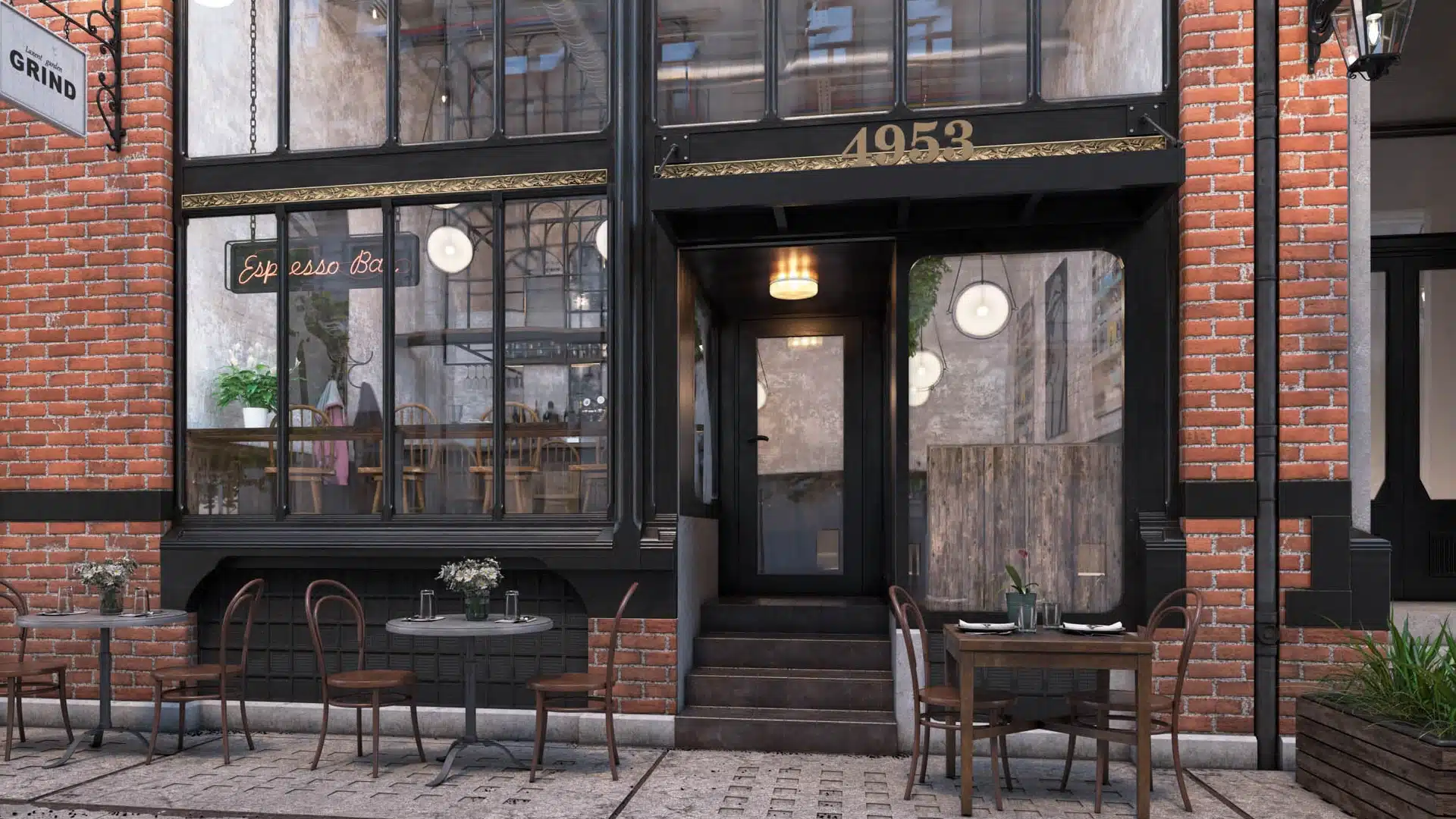
Metal canopies and commercial awnings do more than provide coverage. They help organize how people approach and move through a site. A clearly defined building canopy at the main entrance provides visitors with an immediate visual cue about where to go, especially on larger or more complex properties such as medical campuses, retail centers, or office parks.
Secondary entrances, loading zones, and pedestrian pathways can also be reinforced with smaller metal canopies, creating a hierarchy that improves wayfinding without relying solely on signage. This is especially useful in high-traffic environments where intuitive navigation reduces confusion and congestion.
Canopies and awnings also enhance the user experience. Commercial awnings can mark transitions between public and private spaces, highlight accessible entrances, and guide foot traffic along preferred routes.
When combined with integrated lighting, they improve visibility and safety after dark, making entrances easier to identify and navigate. Metal canopies hold their shape and alignment over time, so these visual cues remain consistent as the building ages. That means fewer adjustments and a more reliable long-term solution for both wayfinding and overall site usability.
Find The Right Canopy Solutions For Your Next Project
Commercial awnings and canopy systems are essential tools in commercial design. They enhance building performance, reinforce brand identity, and contribute to the overall user experience.
When you need aluminum canopy and awning systems that are energy-efficient, adaptable to any aesthetic, and offer branding customization options like custom colors or metalwork, Structureworks has the products you need.
Browse the project gallery to see how we’ve created custom-branded metal canopies for other projects, or explore our metal canopy and awning options. You can also reach out to one of our team members to talk about custom options for your next project.
Categories
Lets Stay in Touch!
Recent Posts