
As cities around the world face steadily rising temperatures, the role of shade in urban life has become increasingly urgent. Extreme heat waves are now more frequent and, in many regions, deadlier than tornadoes, hurricanes, and floods combined. Heat is no longer an occasional environmental stressor; it is a defining condition of contemporary urban life.
One of the most direct and effective tools for protecting public health and enhancing urban livability is built shade.
Pergolas, canopies, awnings, arcades, tensile structures, and covered walkways can reduce perceived temperatures by as much as 20°F by blocking direct solar radiation. In environments where the natural canopy is limited or decades away from maturity, built shade provides immediate thermal relief. As infrastructure, it mitigates dangerous heat exposure, reduces ultraviolet radiation, and creates outdoor environments where people can safely gather, commute, and work even during extreme conditions.
Designing with shade in mind is no longer optional. It is essential. Cities that integrate both natural and built shade create layered, resilient environments that prioritize comfort, health, and usability—transforming overheated landscapes into spaces where people can genuinely thrive.
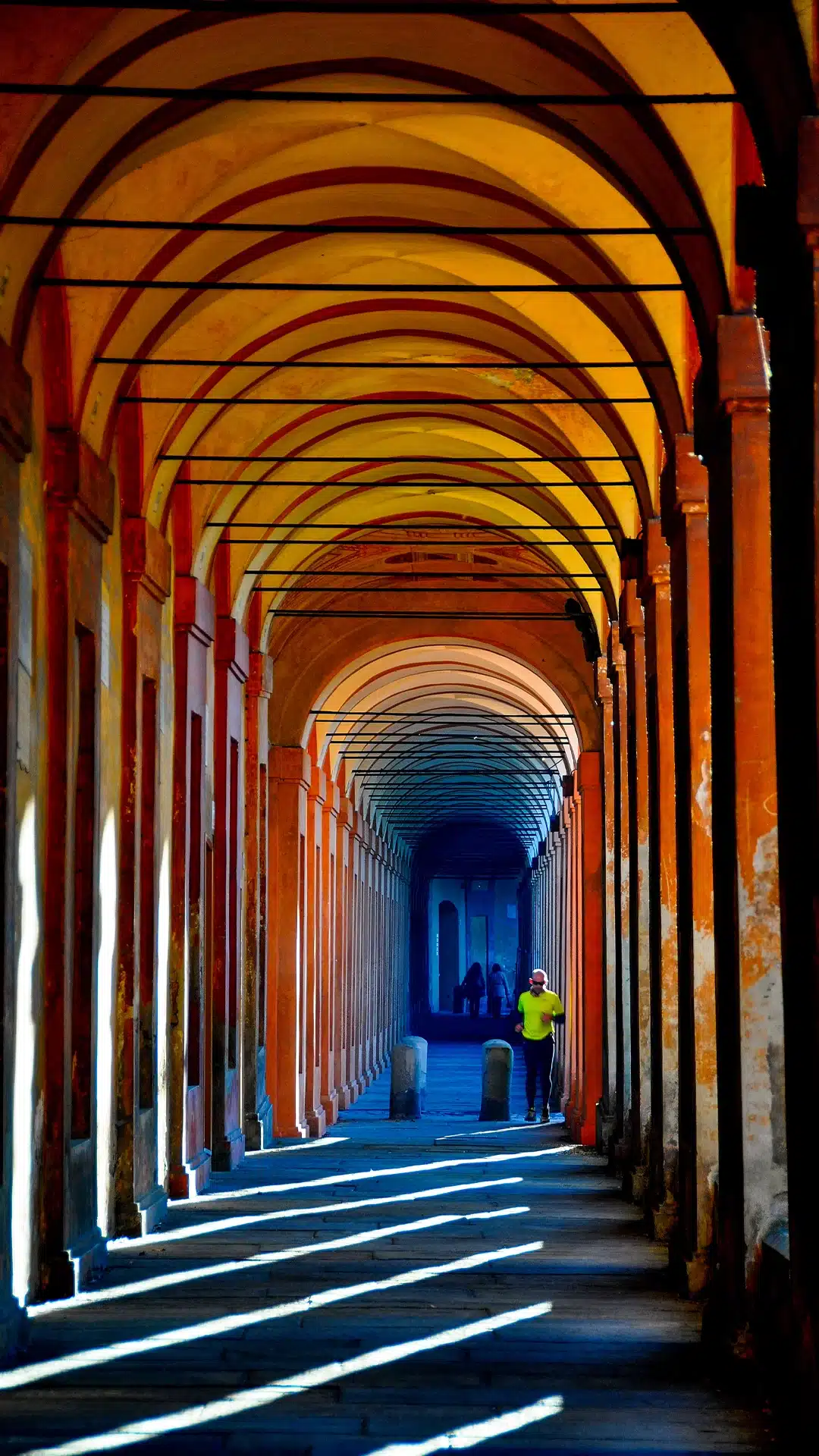
Arcades of Bologna, Italy
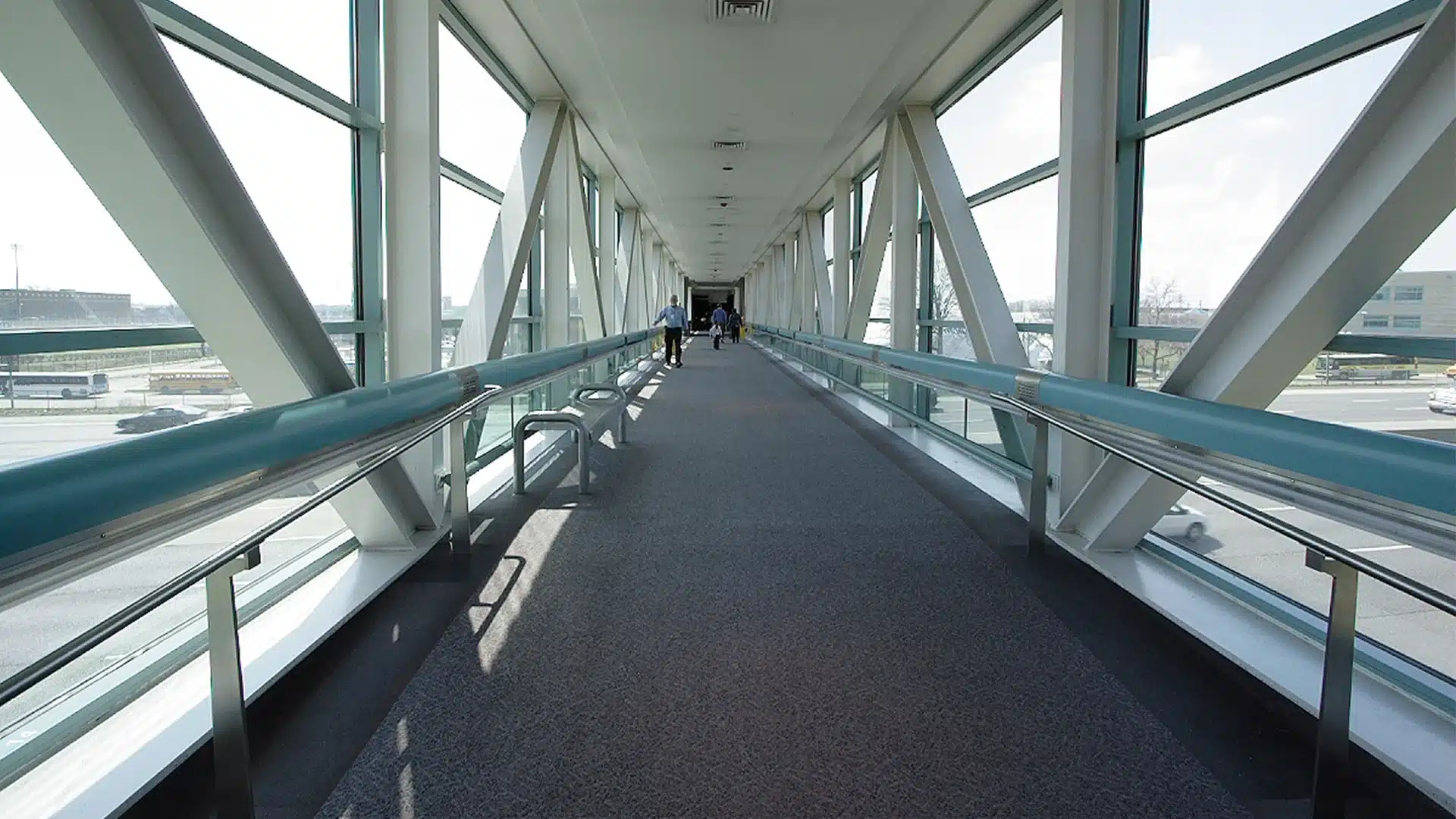 Pedestrian Overpass
Built Shade: Design, Function, and Adaptation
Built shade appears in many forms: pergolas, tensile fabric systems, architectural canopies, umbrellas, covered markets, arcades, and awnings. While materials and structural systems vary, including aluminum, steel, polycarbonate, and fabric membranes, the performance objective remains consistent: reduce solar gain and improve human thermal comfort.
As an engineered response to environmental stress, shade is a frontline strategy. In regions experiencing pronounced urban heat island effects, shaded surfaces can be dramatically cooler than exposed concrete or asphalt.
In Bologna, Italy, more than 25 miles of covered arcades stretch across the city, providing shade and shelter from the sun. These structures were built as early as the 1500s and are not only artistic and beautiful but also very practical, allowing people to move comfortably even during the hottest days of summer, which often reach 100 degrees. Bologna’s arcades show how shade can become a part of a city’s identity and everyday life.
In the Middle East and Africa, shade has become a central pillar in urban design. Cities like Dubai and Marrakesh use covered markets, narrow alleys, and modern canopies to reduce heat while maintaining air flow. Many new developments in desert regions now use pergolas, shaded courtyards, and tensile fabric structures to create comfortable, usable public spaces in extreme heat.
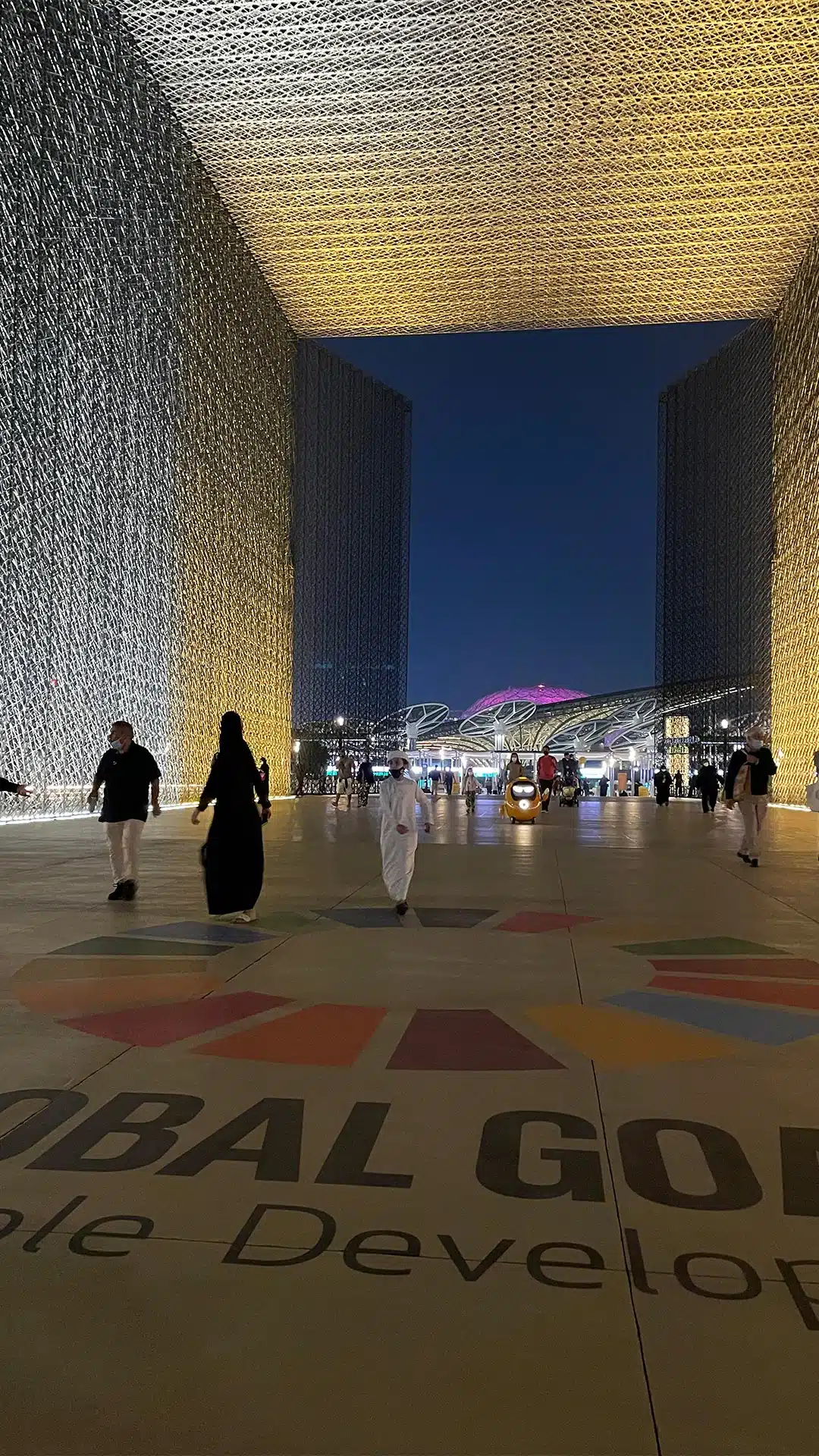
Entrata Expo 2020, Dubai
In the United States, Phoenix, Tucson, and Los Angeles are turning to shade as part of their essential infrastructure to combat intense heat and the impacts of climate change. Phoenix has initiated an initiative that will place 27,000 trees and 550 shade structures in various public places and parks by 2029 to provide a more comfortable space for people to use. Both Phoenix and Los Angeles have also started using a light-gray reflective paint on roads to deflect sunlight and reduce ambient temperatures by up to 3.5 degrees. Yet reflective coatings alone cannot replace shade; they mitigate heat absorption but do not eliminate direct solar radiation on the human body.
From Italy to Arizona, the objective is the same: design for comfort and survival in a warming world. Shade is not simply an architectural embellishment; it is a performance-driven infrastructure.
Hunter Trick (TrickHunter)
Forgotten Shade and Consequences
Modern development has often prioritized vehicular circulation, open hardscape, and visual openness at the expense of the canopy. Tree removal for road widening, parking expansion, and new construction has left many neighborhoods exposed. Asphalt and concrete absorb and re-radiate heat, intensifying the urban heat island effect.
Planning culture has frequently equated brightness with safety and openness with progress. But this perspective overlooks the lived experience of heat.
According to Joey Williams of CAPA Strategies, citywide heat monitoring data consistently shows that those most exposed to extreme temperatures tend to live in communities where shade, both natural and built, has been systematically underprovided. Without meaningful shade, these neighborhoods face disproportionate health risks even before heat waves officially begin.
The decline of shade in cities has serious public health consequences. Rising temperatures contribute to more heat-related illnesses and deaths each year, while prolonged exposure to direct sunlight increases the risk of skin cancer and dehydration. The lack of shade intensifies urban discomfort and deepens social inequalities, making something as simple as waiting for a bus a daily hardship when there is no shelter from the sun.
Environmentally, the lack of shade exacerbates the urban heat island effect. Streets and buildings absorb and radiate heat, raising local temperatures and driving up energy costs as residents rely heavily on air conditioning. This makes life in dense neighborhoods increasingly difficult, with pavements too hot to walk on, pets struggling on short walks, and public spaces that become less inviting. In Los Angeles’ “Paint the Town” initiative, cities are now battling with how to cool their overheated landscapes after decades of building without shade in mind.
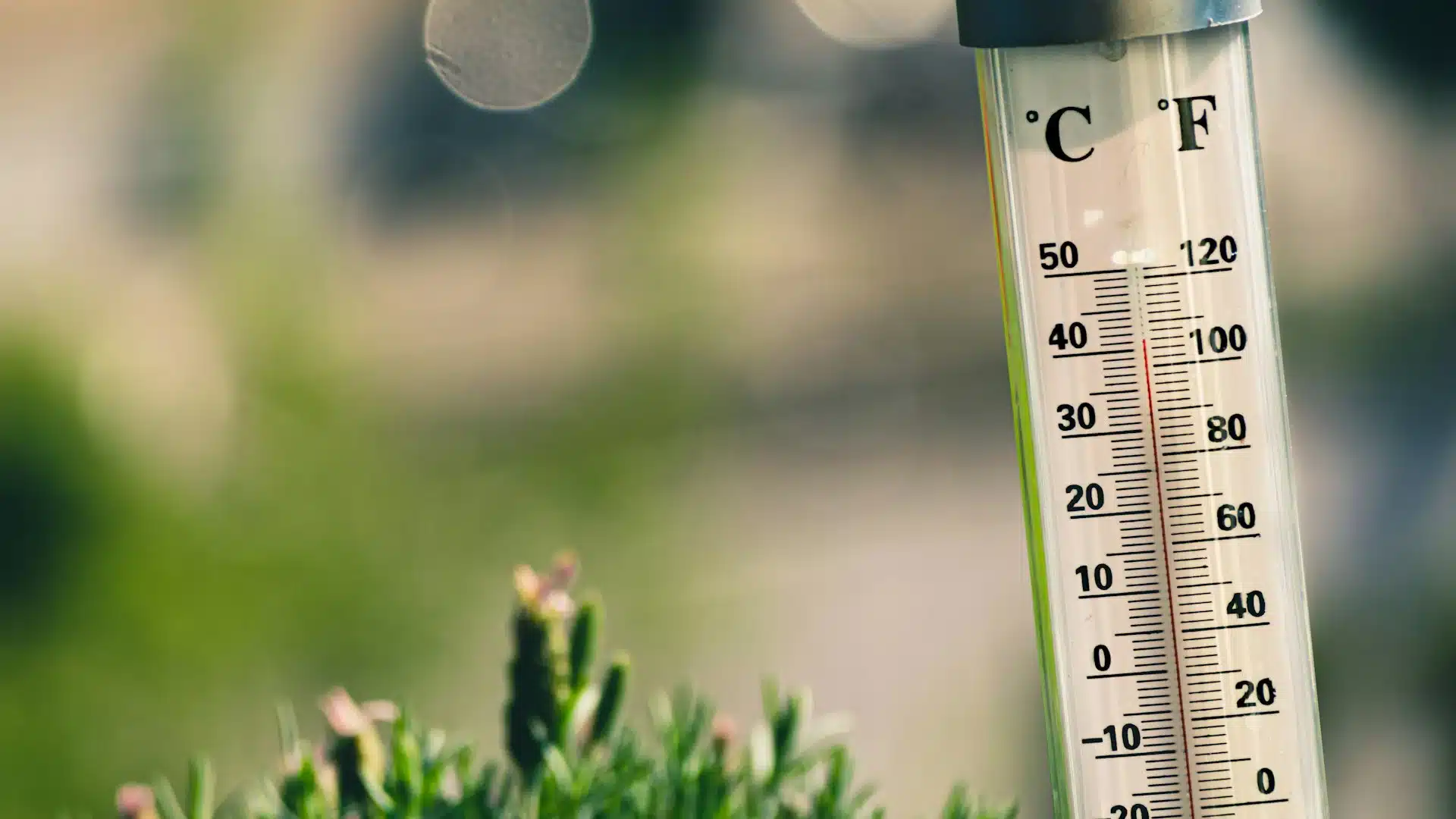
Williams emphasized in our discussion that understanding heat exposure requires more than measuring air temperature. Metrics such as Mean Radiant Temperature (MRT) and Wet-Bulb Globe Temperature (WBGT) reveal the full impact of direct solar radiation on the human body. Shaded environments dramatically reduce MRT, providing measurable protection that reflective coatings or lighter pavements alone cannot achieve.
Without shade, cities are left attempting to cool landscapes that were never designed for human thermal comfort.
Why Shade Gets Cut: Value Engineering and Misclassification
Despite its measurable benefits, shade is frequently treated as an aesthetic enhancement rather than functional infrastructure.
In value engineering phases, shade structures are often categorized as “non-essential.” Benches lose their canopies. Plazas remain exposed. Walkways become inhospitable for much of the day. This pattern repeats across schools, transit stops, retail developments, and multifamily housing projects.
The issue is not a lack of awareness; it is misclassification.
Architects and planners can help change this pattern by reframing shade as Thermal Infrastructure, Public Health Intervention, or Climate Adaptation Strategy rather than artistic decoration.
To prevent elimination during budget tightening, shade should be integrated into primary architectural systems rather than treated as an accessory. Overhangs, circulation corridors, façade articulations, parking layouts, and structural canopies can all be designed to deliver solar control as a core performance feature.
Additionally, documenting shade as a performance requirement, rather than a visual enhancement, strengthens its position during cost review.
Note that shaded spaces:
- Extend material lifespan by reducing UV degradation
- Lower maintenance costs
- Improve occupancy rates and usability
- Increase long-term asset value
When positioned correctly, shade is not an expense. It is risk mitigation.
Learning from Design Challenges
Several recent projects illustrate the consequences of prioritizing form over function.
La Sombrita : Los Angeles
In Los Angeles, one of the most talked-about examples of the city’s struggle with shade is La Sombrita, a small perforated metal structure shaped somewhat like an upside-down skateboard. It was designed to provide shade and safety to people who wait at bus stops, especially in neighborhoods where tree canopies and bus shelters are scarce. However, the installation of this structure quickly drew criticism for how little shade it actually provided. At certain times of day, it provides negligible shade. This project sparked a broader conversation about equity, design, and what meaningful shade infrastructure should look like, raising the question of whether cities are just checking boxes or genuinely addressing the comfort and safety of those who rely on public spaces.
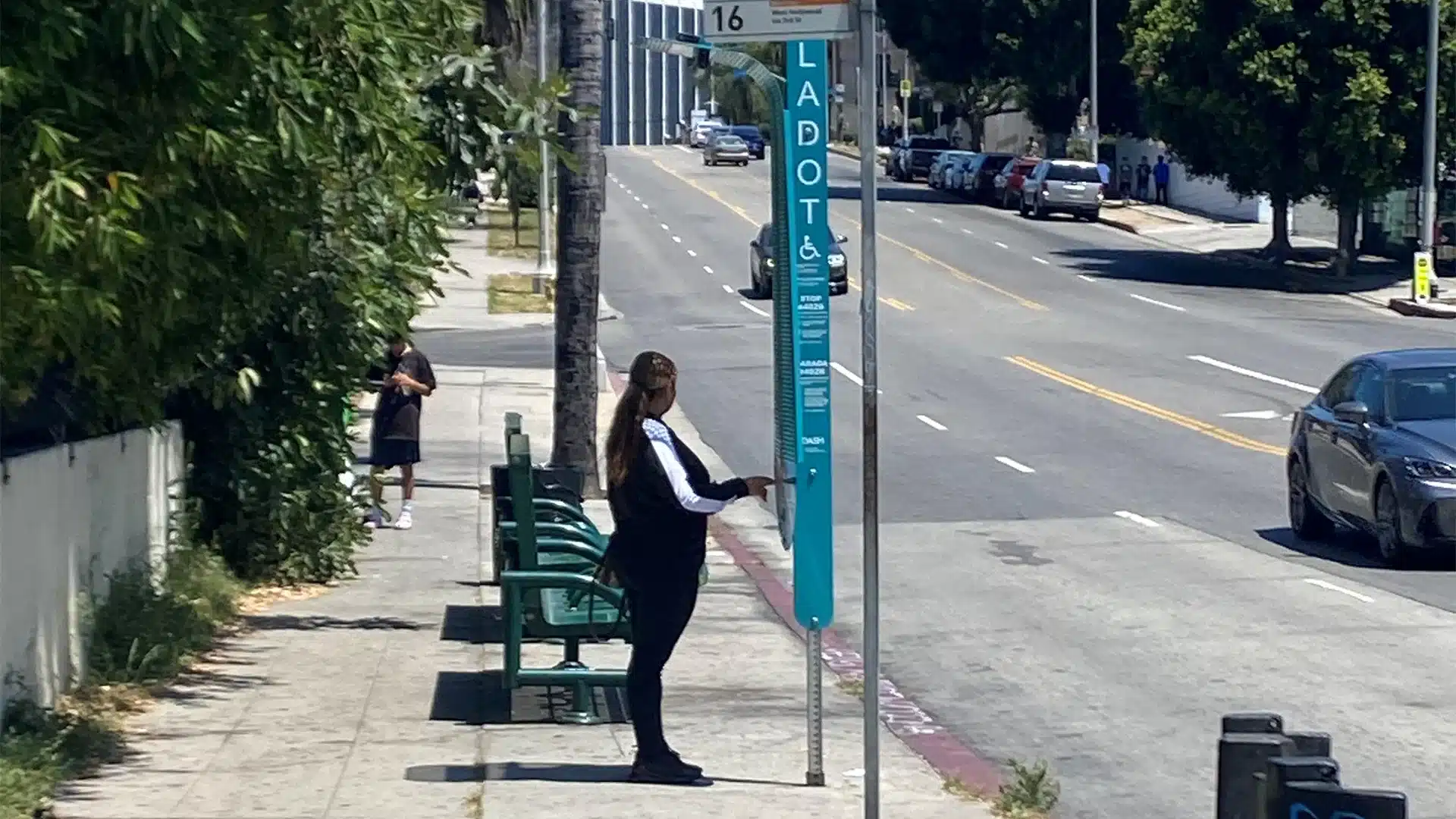
La Sombrita, Los Angeles, CA
This project cost $200,000 and ultimately failed as a design, highlighting a disconnect between design intent and functional performance. This example shows that aesthetics and innovation cannot replace practicality.
Presley Apartments: Oklahoma City
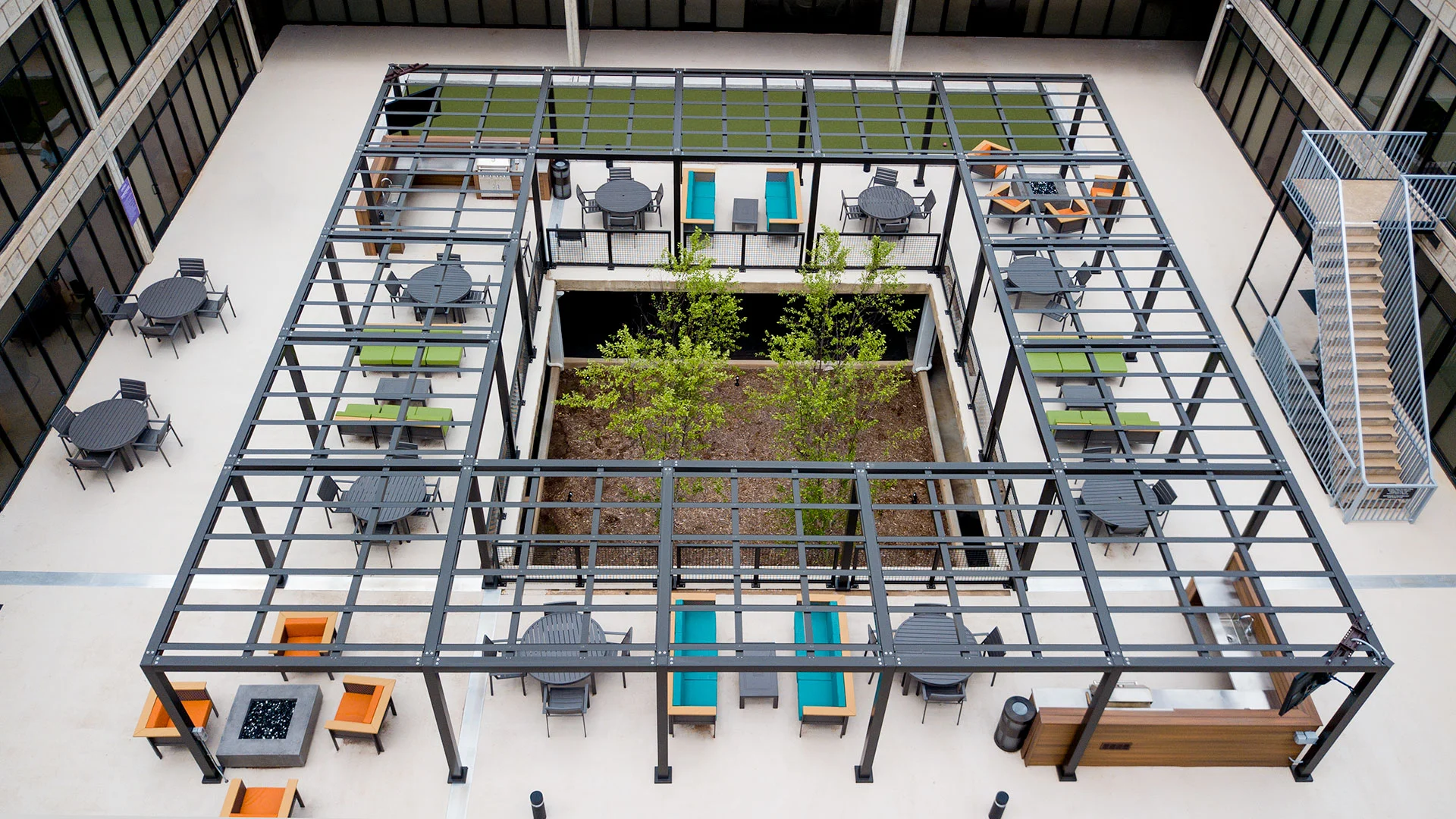
Twin structures were designed to invite people to gather outside and enjoy the property’s amenities. It is a strong example of how customization does not always rely on complex curves or highly specialized forms; simple, clean geometry can still make a powerful design statement.
Visually, the structure achieves the design intent by enhancing the architecture and adding a striking focal point to the site. However, it falls short in one crucial way. It does not provide any real shade or relief from the sun. It looks the part, but does not complement with additional functions. A more thoughtfully designed version could include canopies, polycarbonate panels, or aluminum screening elements to provide meaningful sun protection, allowing people to enjoy the space’s comfort.
Robert C. Weaver Federal Building Plaza: Washington, D.C.
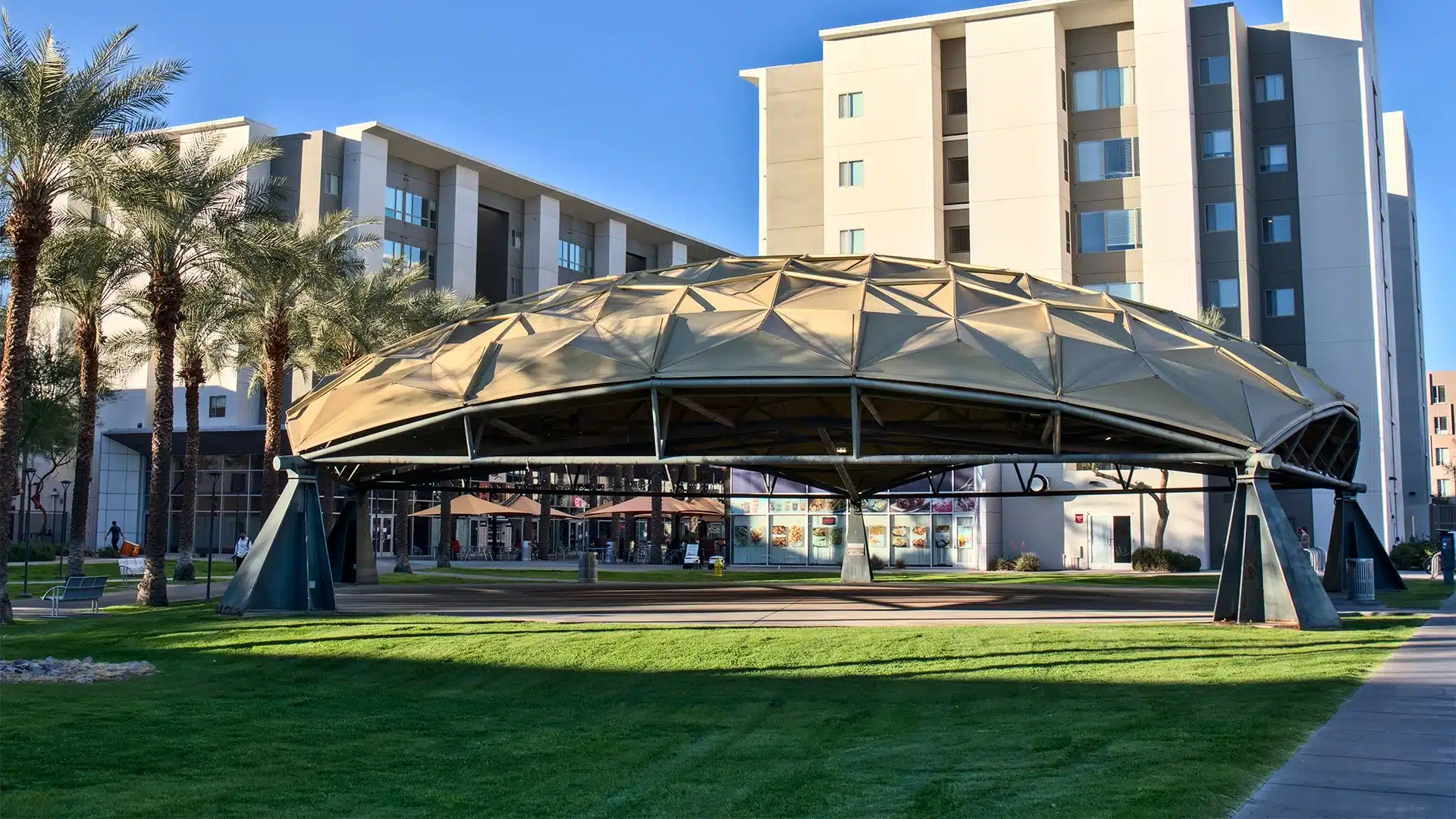
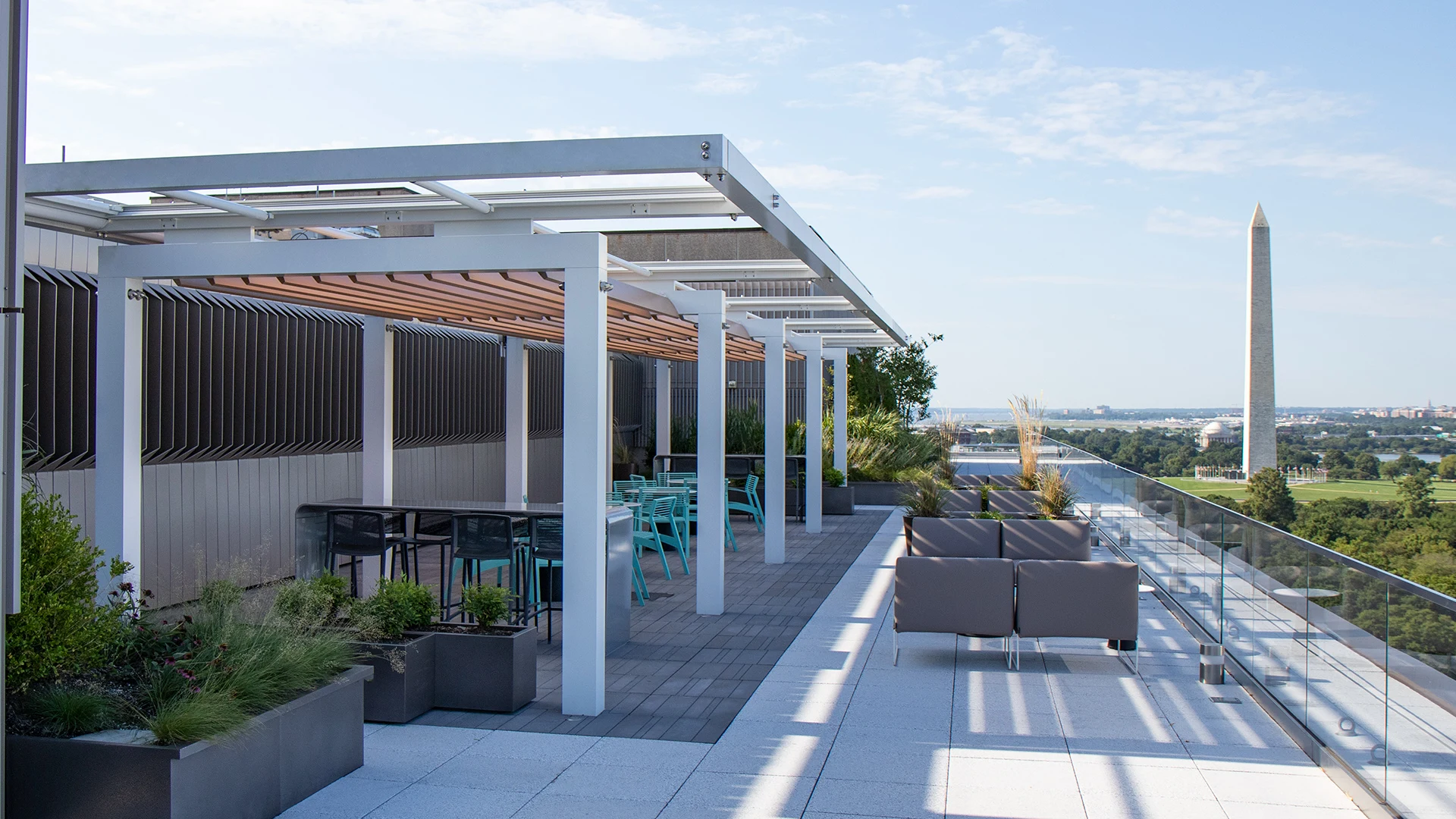
At the headquarters of the US Department of Housing and Urban Development, large circular canopies are mounted on tall poles described as flying saucers in the press coverage. Despite the sculptural canopies, the seating areas and planters they were meant to shade received very little protection during midday summer sun. The canopies were too high, positioned too far from the seating areas, and the orientation did not align with the sun’s path. As a Washington Post article read, “The canopies do not cast much shade on the grassy disks at lunchtime under the summer sun… to provide shade for these seating areas was, of course, one of the main purposes of the canopies.
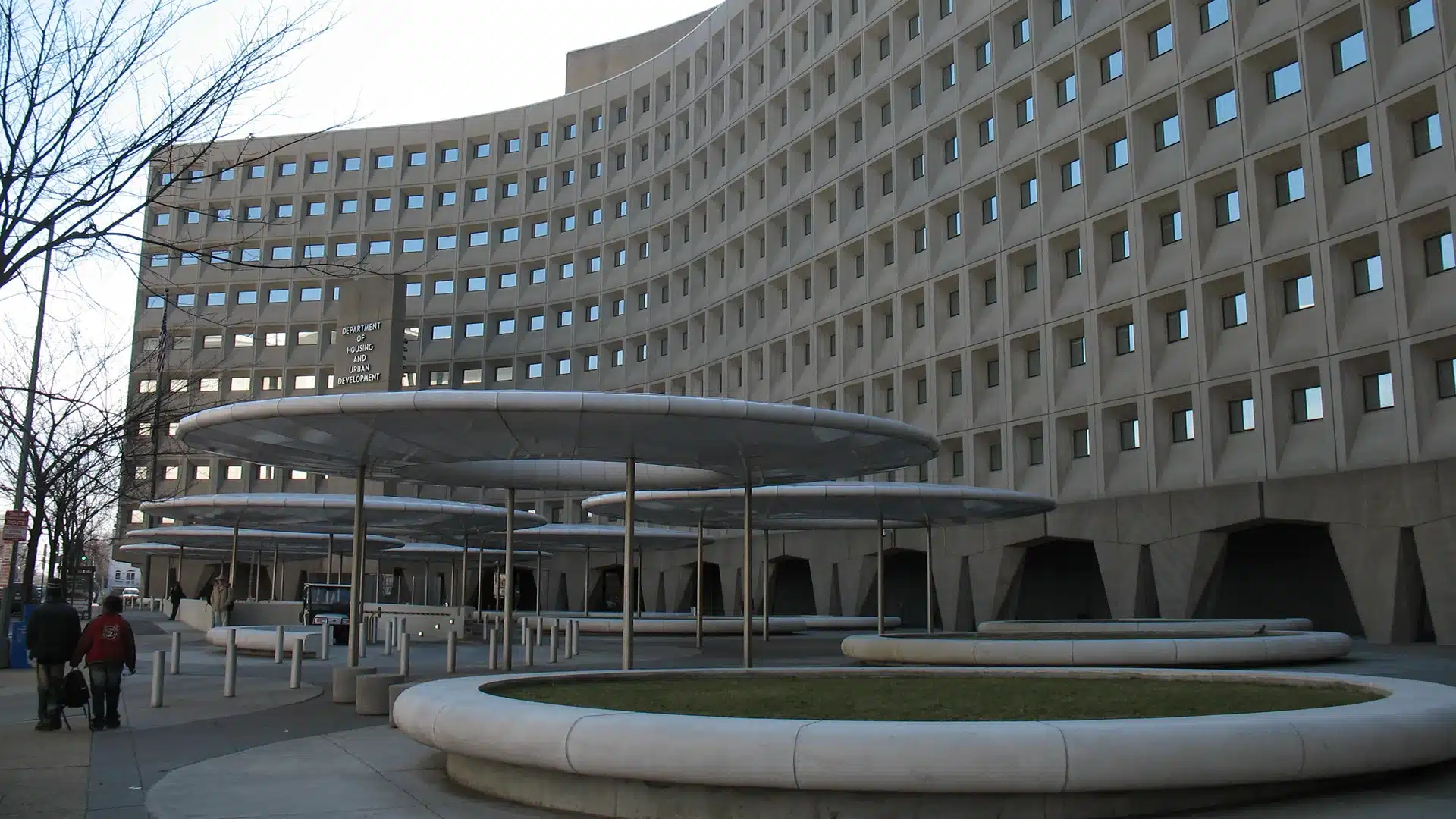
Robert C. Weaver Building
Collaborative Design – Bringing Experts to the Table
Designing effective shade is not just about aesthetics or structural engineering; it requires cross-disciplinary collaboration from the earliest stages of a project. Architects, urban planners, and landscape designers all bring unique expertise that, when integrated, ensures shade structures are both functional and visually compelling.
Early collaboration prevents one of the most common mistakes in public space design, which is having a design that is decorative but not functional. A structure may look great on renderings or on paper, but without input from experts who understand the sun angles, material performance, and human behavior, it may fail to provide meaningful relief from heat. In reality, beautiful forms alone cannot guarantee comfort.
Beautiful form alone does not guarantee comfort. Measurable performance does.
Design Shade That Performs
As cities continue to warm, professionals shaping the built environment carry increasing responsibility. Shade must be elevated to the same level of importance as stormwater management, lighting, accessibility, and structural safety.
The critical shift begins with better questions:
- How does this space perform at peak summer sun?
- What is the Mean Radiant Temperature at noon in July?
- Where do people wait, gather, and move—and are those areas protected?
- Does the design reduce heat exposure equitably across communities?
When thermal comfort becomes a design driver rather than an afterthought, spaces become safer, healthier, and more usable.
Shade is not merely an architectural feature. It is climate infrastructure.
And in an increasingly hot world, it is fundamental to how cities remain livable.
Categories
Lets Stay in Touch!
Recent Posts